We investigate the basic mechanisms of transcription using various
bacterial systems. We are particularly interested in the elaborate mechanics of the
elongation phase of the transcription cycle.
Using various biochemical and protein
chemical tools developed in our lab over the years, we examine how RNA polymerase
moves along its DNA template, how it responds to regulatory factors and signals encoded
in RNA and DNA, and how it terminates transcription.
We also study the interplay
between transcription and other major cellular processes, such as translation, replication and repair of DNA.
Nitric oxide (NO) and hydrogen sulfide (H2S) are well known
signaling molecules in mammals. However, their functions in common bacteria are
largely unknown. We demonstrated that various bacterial species generate NO and
H2S enzymatically from arginine and cysteine, respectively, and that these two gases
function to protect bacteria from oxidative stress and a wide range of antibiotics.
Moreover, bacterial NO and H2S act together to protect pathogens such as S. aureus
and B. anthracis from immune attack. Microarray analyses indicated that endogenous
NO and H2S regulate hundreds of bacterial genes. We are currently elucidating the
molecular mechanisms of such regulation at the transcriptional and post-transcriptional
levels.
We also study how these gases are regulated in bacteria and how they affect key
physiological and clinically relevant processes such as biofilm formation, swarming,
motility, sporulation, and quorum sensing.
Heat shock genes encode molecular chaperones and
other cytoprotective molecules that prevent accumulation of damaged proteins. In
eukaryotes, synthesis of heat shock proteins (HSPs) is regulated primarily at the level
of transcription by a master activator HSF1.
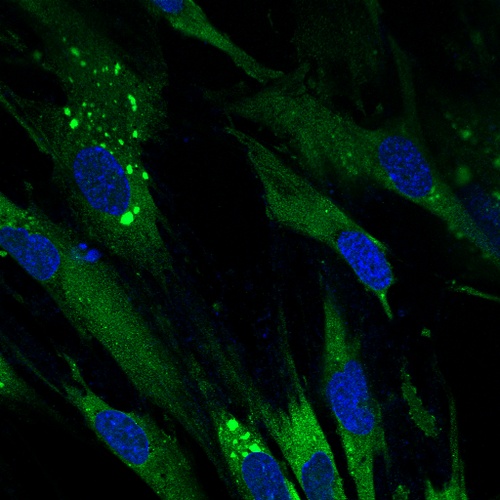
We identified a nucleoprotein complex, containing the translation elongation factor eEF1A1 and a non-coding RNA that is required for HSF1 activation. We also showed that eEF1A1 orchestrates the entire process of heat shock response (HSR), from the transcriptional activation of heat shock genes to the stabilization, transport, and translation of their mRNAs. We continue to investigate the complex mechanism of HSR at transcriptional and post-transcriptional levels.
The results of our studies will have implications for numerous physiological conditions associated with protein misfolding, including various types of cancer and neurodegenerative diseases.
We use the round worm, Caenorhabditis elegans as a model
system to investigate how commensal bacteria affect the physiology and aging of their
hosts.
Bacteria are not merely food for C. elegans. They colonize adult worms and can
dramatically influence the animal’s behavior and life span. Similarly, billions of bacteria
colonize the mammalian digestive tract, including that of the human. However, their
effects on human wellbeing and lifespan remain largely unknown.
In the laboratory,
C. elegans is fed almost exclusively on E. coli. However, in their natural habitat
these nematodes consume soil bacteria, such as Bacilli. Remarkably, worms fed B.
subtilis live twice as long as those fed E. coli. We identified several key metabolites
produced by B. subtilis that extend the life span of the worm and render it more resistant
to environmental stressors such as heat and oxidants.
We are designing probiotic strains of bacteria that significantly extend the nematode life span. We also investigate the mechanisms by which bacteria-derived small molecules increase nematode longevity. Separately, we study how different forms of commensal bacterial communities (e.g. biofilms) influence the nematode life span and resistance to stress and infection.